


- Archeologia
- Bibliologia i informatologia
- Bibliotekoznawstwo
- Biologia
- Chemia
- Ekonomia i zarządzanie
- Etnologia i antropologia kulturowa
- Filologia polska
- Filologie obce
- Filozofia
- Fizyka
- Geografia
- Historia
- Informatyka
- Językoznawstwo
- Judaica
- Kultura i sztuka
- Kulturoznawstwo
- Matematyka
- Pedagogika
- Podręczniki dla cudzoziemców
- Politologia i stosunki międzynarodowe
- Prawo
- Promocje
- Psychologia
- Socjologia
- Varia
- 100 Lat Niepodległości
- Akademia Samorządowa
- Akademia Zarządzania i Finansów
- Aktywni (nie)pełnosprawni
- Analecta Literackie i Językowe
- Bibliotheca Litteraria
- Bibliotheca Philosophica
- Biografia i Badanie Biografii
- Byzantina Lodziensia
- Filmo!znawcy
- Gerontologia
- Interdyscyplinarne Studia Miejskie
- Interpretacje Literackie
- Jerzy Giedroyc i Świadkowie Historii
- Judaica Łódzkie
- Jurysprudencja
- Literaturoznawstwo. Sylwetki
- Manufactura Hispánica Lodziense
- Nauka Sztuki – Sztuka Nauki
- Oblicza feminizmu
- Oblicza Wojny
- Perspektywy Biograficzne
- Polska Kultura Filmowa
- Research on Science & Natural Philosophy
- Series Ceranea
- Skuteczne Zdziwienie
- Sztuka-Media-Kultura
- Twórczość i Edukacja
- Łódzkie Studia z Językoznawstwa Angielskiego i Ogólnego
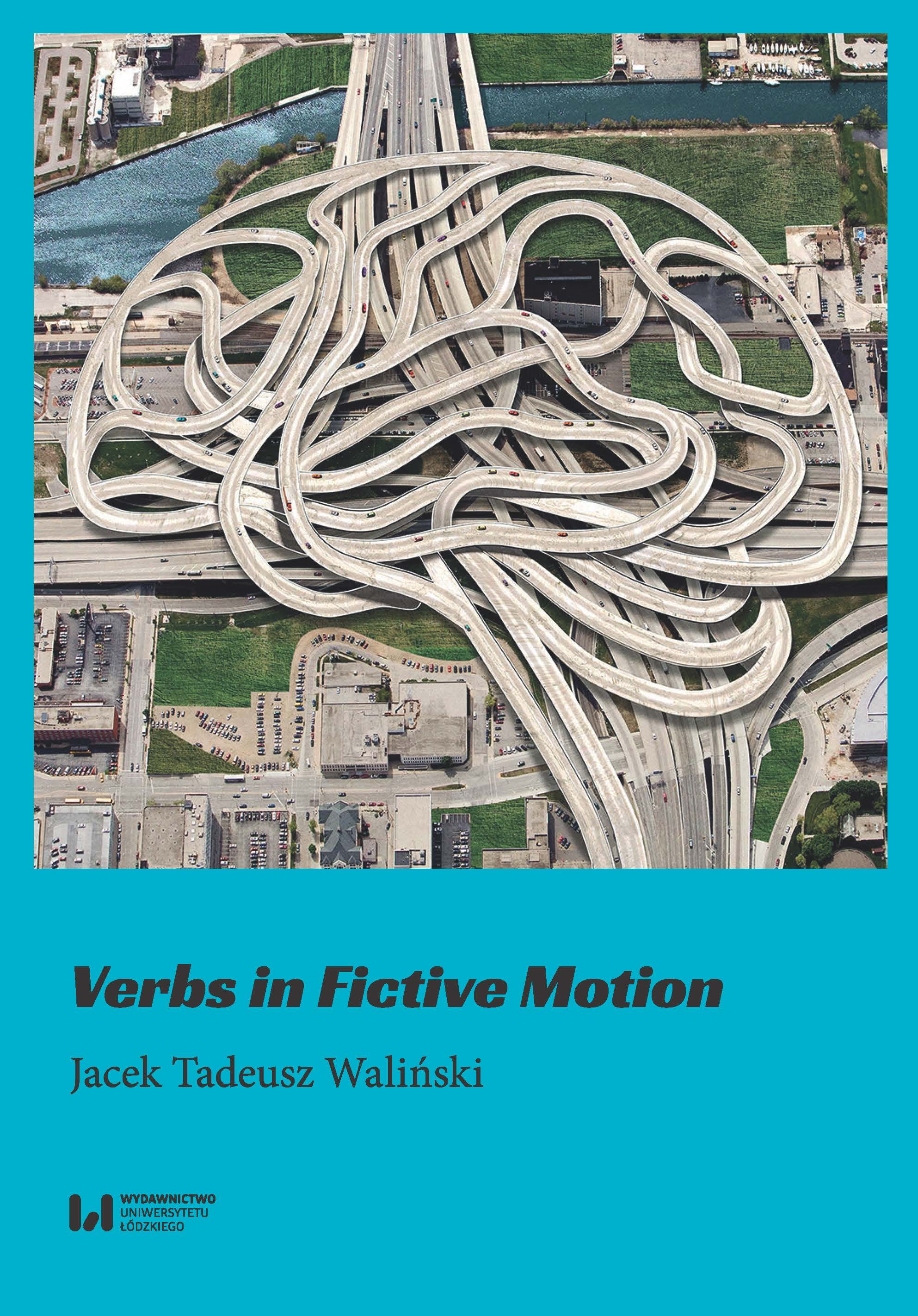
Verbs in Fictive Motion
Autor: Jacek Tadeusz Waliński
Liczba stron: 278
Rok wydania: 2018
ISBN: 978-83-8142-382-3
e-ISBN: 978-83-8142-383-0
- Opis produktu
- Spis treści
- Recenzje produktu (0)
A holographic image of structuring coextension paths that emerges from the linguistic data indicates that whereas directional motion verbs tend to be used in fictive motion to express bounded paths, directions, and routes, verbs of motion manner are employed to specify shapes constituting subjective counterparts of spatial contours of actual motion. Moreover, depending on the particular use and the wider linguistic context, certain coextension path expressions can be interpreted as a result of conceptual blending, which fuses multiple facets of motion via a common communicative platform established dynamically in discourse.
From the perspective of the analysis, these interpretations are not mutually irreconcilable. The evocation of a particular conceptualization triggered by the semantic attributes conflated in a verb and its satellites is likely to depend not only on individual comprehension strategies, but also on the degree of cultural-linguistic conventionalization of certain fictive motion patterns established through the processes of language acquisition and social transfer.
Tables 11
Introduction 13
Chapter 1. Motion in language and cognition 23
1.1 Motion in natural philosophy 23
1.2 Ties among time, space, and motion 29
1.3 Primacy of movement in cognition 34
1.4 Image schemas 36
1.5 Basic image schemas of motion 39
1.6 Beyond basic schemas of motion 44
1.7 Lexicalization patterns of motion events 48
1.8 Influence of lexicalization patterns on cognitive processes 51
1.9 Types of motion beyond lexicalization patterns 54
Chapter 2. Cognitive linguistic models of fictive motion 59
2.1 Linguistic fictivity 59
2.2 Fictive motion as sequential/summary scanning 66
2.3 Talmy’s account of coextension paths 71
2.4 The relation of fictive motion to metaphor 76
2.5 Fictive motion as conceptual integration 78
2.6 Coextension paths as expressions of state 81
2.7 Structuring fictive motion across languages 87
2.8 Conceptual motivation of fictive motion 94
Chapter 3. Cognitive processing of fictive motion 97
3.1 Fictive motion as mental simulation 97
3.2 Psycholinguistic experiments 101
3.3 Drawing studies 105
3.4 Influence on temporal construal 107
3.5 Eye-tracking experiments 111
3.6 Insights from brain studies 116
Chapter 4. Cognitive corpus-based linguistic approach to fictive motion 123
4.1 Cognitive linguistics 123
4.2 Corpus linguistics 127
4.3 Corpus-based cognitive semantics 130
4.4 Corpora in linguistic studies 132
4.5 Corpus linguistic workbench 134
4.5.1 The British National Corpus 135
4.5.2 WordNet 136
4.5.3 VerbNet 138
4.6 Retrieving fictive motion expressions from corpora 139
Chapter 5. Directionality in fictive motion 141
5.1 Cognitive encoding of directionality 141
5.2 Semantic models of directionality 146
5.3 Directionality in linguistic encoding of motion 148
5.4 Directional motion verbs 151
5.5 Directionality in fictive motion expressions 155
5.5.1 Research methodology 156
5.5.2 Source/goal verbs 158
5.5.3 Unbounded path verbs 161
5.5.4 Route verbs 164
5.5.5 Constant verbs 166
5.5.6 Deictic verbs 168
5.6 Directionality in fictive motion 172
Appendix to Chapter 5 177
Chapter 6. Manner and instrument in fictive motion 179
6.1 Manner in motion semantics 179
6.2 Semantic models of motion manner 182
6.3 Verbs of motion manner 186
6.4 Empirical studies on motion manner 190
6.5 Polysemy of motion manner verbs 192
6.6 Motion manner verbs in fictive motion 193
6.6.1 Research methodology 195
6.6.2 Verbs of rolling 197
6.6.3 Verbs of walking 201
6.6.4 Verbs of running 203
6.6.5 Verbs of unsteady movement 206
6.7 Manner semantics in fictive motion 208
6.8 Entanglement of manner and instrument 211
6.9 Instrumental motion verbs in fictive motion 213
6.10 Instrumentality in fictive motion 215
Appendix to Chapter 6 217
Observations and conclusions 221
7.1 Frequency of verbs in fictive motion 221
7.2 Generic verbs of fictive motion 223
7.3 Paths and shapes 226
7.4 Beyond paths and shapes in fictive motion 229
7.5 Conclusions 233
Bibliography 237
Nikt jeszcze nie napisał recenzji do tego produktu. Bądź pierwszy i napisz recenzję.
Tylko zarejestrowani klienci mogą pisać recenzje do produktów. Jeżeli posiadasz konto w naszym sklepie zaloguj się na nie, jeżeli nie załóż bezpłatne konto i napisz recenzję.
