


- Archeologia
- Bibliologia i informatologia
- Bibliotekoznawstwo
- Biologia
- Chemia
- Ekonomia i zarządzanie
- Etnologia i antropologia kulturowa
- Filologia polska
- Filologie obce
- Filozofia
- Fizyka
- Geografia
- Historia
- Informatyka
- Językoznawstwo
- Judaica
- Kultura i sztuka
- Kulturoznawstwo
- Matematyka
- Pedagogika
- Podręczniki dla cudzoziemców
- Politologia i stosunki międzynarodowe
- Prawo
- Promocje
- Psychologia
- Socjologia
- Varia
- 100 Lat Niepodległości
- Akademia Samorządowa
- Akademia Zarządzania i Finansów
- Aktywni (nie)pełnosprawni
- Analecta Literackie i Językowe
- Bibliotheca Litteraria
- Bibliotheca Philosophica
- Biografia i Badanie Biografii
- Byzantina Lodziensia
- Filmo!znawcy
- Gerontologia
- Interdyscyplinarne Studia Miejskie
- Interpretacje Literackie
- Jerzy Giedroyc i Świadkowie Historii
- Judaica Łódzkie
- Jurysprudencja
- Literaturoznawstwo. Sylwetki
- Manufactura Hispánica Lodziense
- Nauka Sztuki – Sztuka Nauki
- Oblicza feminizmu
- Oblicza Wojny
- Perspektywy Biograficzne
- Polska Kultura Filmowa
- Research on Science & Natural Philosophy
- Series Ceranea
- Skuteczne Zdziwienie
- Sztuka-Media-Kultura
- Twórczość i Edukacja
- Łódzkie Studia z Językoznawstwa Angielskiego i Ogólnego
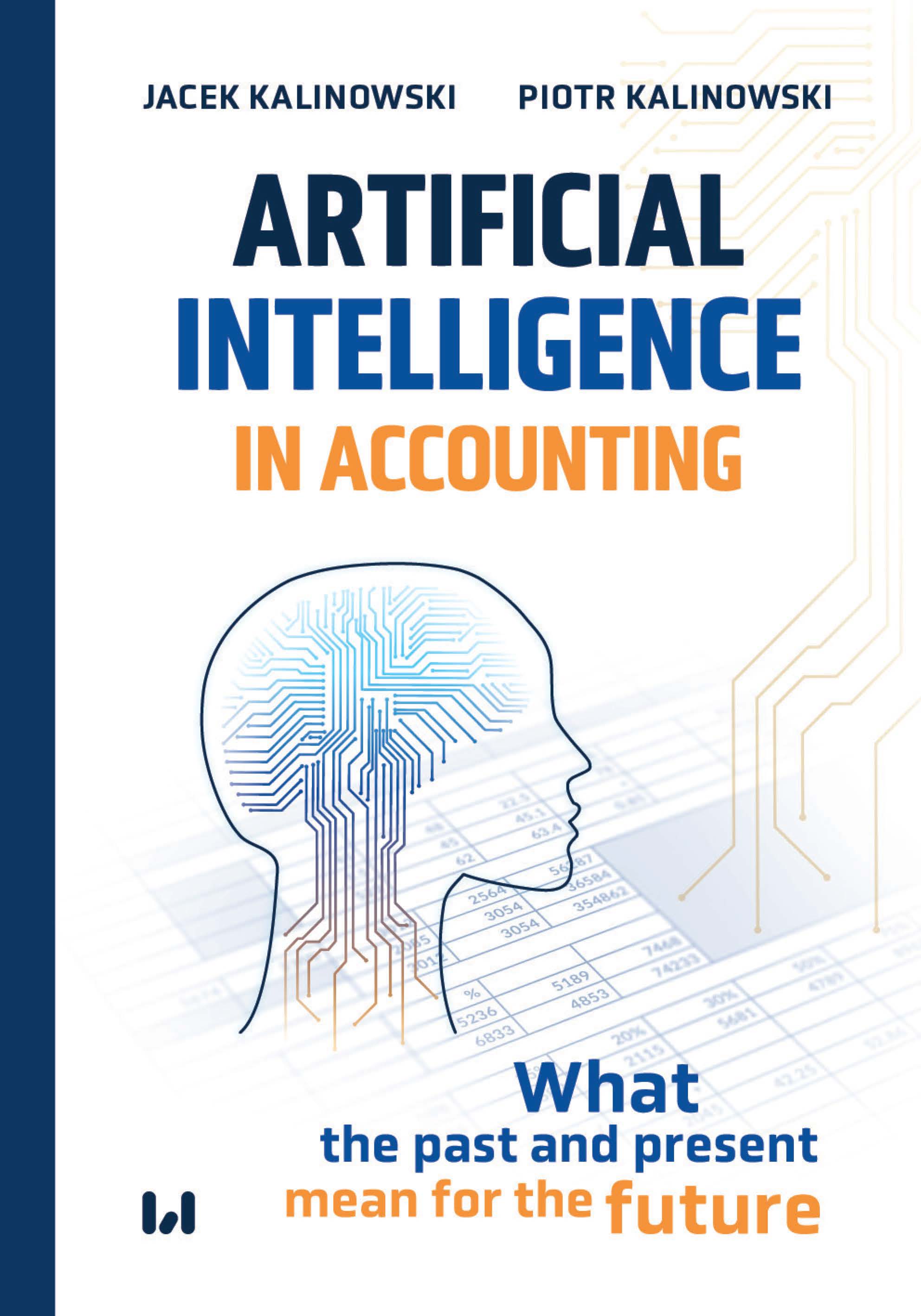
Artificial Intelligence in Accounting
What the past and present mean for the future
Stan magazynowy:
Autor: Jacek Kalinowski
Autor: Piotr Kalinowski
Liczba stron: 118
Rok wydania: 2025
ISBN: 978-83-8331-879-0
e-ISBN: 978-83-8331-880-6
Format e-book: pdf
- Opis produktu
- Spis treści
- Recenzje produktu (0)
At the same time, it serves as a practical guide to AI tools. The authors organize and systematize a wide range of technologies – from OCR and RPA, through chatbots and popular solutions such as ChatGPT or Microsoft Copilot, to large language models including GPT, Gemini, Perplexity, and DeepSeek. Such a broad spectrum can easily overwhelm, but this book provides a clear and structured introduction. Reviewer Prof. Karol Klimczak highlighted its logical structure and comprehensive scope, which make the work valuable for both scholars and practitioners.
For that reason, AI in Accounting is not only essential reading for accountants, controllers, and auditors, but also an accessible guide for anyone beginning their journey with AI – whether in finance, education, business, the arts, or any other field where artificial intelligence can become a source of support and inspiration.
Chapter 1. Understanding Artificial Intelligence — Definitions, History, and Tools 13
1.1. Artificial Intelligence — Definitions, Boundaries, and Meanings 13
1.2. The History of Chatbots — Conversations That Changed the World 15
1.2.1. ELIZA — The Ancestor 15
1.2.2. PARRY — The Vision of Chatbots’ Potential 16
1.2.3. Jaberwacky — Addressing the Limitations 17
1.2.4. Siri — The Impact of Chatbots 18
1.3. The History of Artificial Intelligence — From Dreams to First Successes 20
1.3.1. Humanity’s Early Dream 20
1.3.2. The Dawn of the Age of AI 20
1.3.3. Perceptron — The First Spark of Machine Intelligence 22
1.3.4. AI Winters — Roadblocks in Development 22
1.3.5. The Resurgence of AI — Breakthroughs in Backpropagation 23
1.4. The History of Artificial Intelligence — Breakthroughs, Crises, and New Hopes 24
1.4.1. New Models, New Potential — Bayesian Networks and LSTM 24
1.4.2. Deep Blue — The Machine That Beat the World Champion 25
1.4.3. The Deep Learning Revolution — Hinton’s Legacy 26
1.4.4. GPUs — Fuelling the Data-Hungry Brain 26
1.4.5. GANs — Machines that Imagine 27
1.4.6. GPT’s — Giving Machines a Voice 27
1.4.7. AlphaFold 2 — AI Meets Biology 28
1.4.8. From DALL·E and Sora — AI in Art 29
1.4.9. The Oracle — ChatGPT and Its Impact 29
1.5. The AI Ecosystem — Introduction and Its Practical Relevance 30
1.5.1. A First Look at Today’s AI Ecosystem 30
1.5.2. ChatGPT (Platform by OpenAI) 31
1.5.3. Claude (Platform by Anthropic) 32
1.5.4. Gemini (Platform by Google DeepMind) 32
1.5.5. Copilot (Platform by Microsoft) 33
1.5.6. Perplexity (Platform by Perplexity AI) 33
1.5.7. Grok (Platform by xAI) 34
1.5.8. DeepSeek (Platform by DeepSeek AI) 34
1.5.9. LLaMA-Based Tools (Various Platforms) 35
Chapter 2. The History of Technology and Artificial Intelligence in Accounting — From Invention to Automation 37
2.1. The History of Invention — From Fire to Algorithm as the Context for AI Development 37
2.1.1. The Technological March of Humanity Toward Intelligence 37
2.1.2. Inventions as a Mirror of Social and Economic Changes 39
2.1.3. Four Industrial Revolutions: From the Steam Engine to Algorithms 40
2.1.4. Toward Intelligent Systems — The Birth of Thinking Machines 41
2.2. The Origins of Counting — From Myths and the Abacus to Early Computational Practices 42
2.2.1. The Abacus — The First “Digital” Accounting Tool 42
2.2.2. From Myth to Logic — Ancient Sources of Accounting Technologies 43
2.3. The Age of Mechanical Dreams — Inventions That Transformed Accounting 46
2.3.1. Leibniz’s Calculating Machine — The Mechanical Dream of Intelligence 46
2.3.2. Mechanization and Digitization — From the Burroughs Machine to Mainframes 47
2.4. The Dawn of the Digital Era — Microcomputers and Integrated Accounting Systems 51
2.4.1. The Microcomputer Revolution and the Birth of Accounting Software 51
2.4.2. From ERP to RPA — On the Integration and Automation of Accounting Systems 53
2.5. Toward Intelligence — Machine Learning and Artificial Intelligence in 21st-Century Accounting 56
2.5.1. The New Face of the Accounting Professional in the Digital Era 56
2.5.2. Machine Learning and AI in 21st-Century Accounting 58
Chapter 3. Contemporary Applications of AI in Accounting — Directions and Processes 61
3.1. Strategic and Managerial Directions of AI Applications 61
3.1.1. The Strategic Importance of Applying AI in Accounting 61
3.1.2. Performance Under Control — Modern Controlling Supported by AI 63
3.1.3. Regulatory Intelligence — AI in Tax and Compliance 66
3.2. Automation and Optimization of Accounting Processes 68
3.2.1. Routine Automation — AI and RPA in Accounting Records 68
3.2.2. Reporting 2.0 — Algorithms in Financial Reporting 71
3.3. Analytical Support and Human–Machine Collaboration 73
3.3.1. Prediction and Analytics — Forecasting with AI 73
3.3.2. Detecting the Undetectable — Fraud and Anomaly Detection Using AI 76
3.3.3. Human–Machine Collaboration — Cognitive Interfaces in Accountants’ Work 80
Chapter 4. AI in Practice — Case Studies from Leading Organizations Worldwide 85
4.1. An Introduction to Inspiring Stories That Shape the Future of Accounting 85
4.2. Strategic and Managerial Applications of AI 86
4.2.1. Unilever — AI in Cost Optimization, Management Transformation and ESG Goals 86
4.2.2. KPMG — AI in Financial Reporting and Auditing 87
4.2.3. Ernst & Young — AI in Audit and Fraud Detection 89
4.3. Process Automation and Operational Optimization 91
4.3.1. Uber — Automation of Financial Processes 91
4.3.2. Cognizant — The Use of RPA in the Mass Processing of Invoices 93
4.3.3. IBM — AI and OCR in Invoicing 94
4.3.4. Aceable — OCR in Cost Invoices 97
4.4. Analytical Support and Human–Machine Collaboration 98
4.4.1. Mastercard — Fraud Detection with GenAI 98
4.4.2. Deloitte — DARTbot for Auditors 100
4.4.3. Bank of America — Chatbot Erica 101
Key Findings and Summary 105
References 111
Nikt jeszcze nie napisał recenzji do tego produktu. Bądź pierwszy i napisz recenzję.
Tylko zarejestrowani klienci mogą pisać recenzje do produktów. Jeżeli posiadasz konto w naszym sklepie zaloguj się na nie, jeżeli nie załóż bezpłatne konto i napisz recenzję.
